No property owner wants to hear that an underground sewer line may need to be replaced. It sounds disruptive, expensive, and complicated. For that reason, many people continue paying for repeated cleanings and small repairs even when the original pipe is nearing the end of its useful life.
A minor defect can often be repaired successfully. But when damage is spread throughout the line, another temporary fix may only postpone the same problem.
Knowing when to consider sewer replacement can prevent repeated backups, property damage, and costly emergency calls.
Repairing the Symptom vs. Solving the Problem
Drain cleaning can restore flow when grease, paper, debris, or roots are blocking a structurally sound pipe. A localized repair can also be effective when damage is limited to one clearly identified area.
The situation changes when the sewer has several defects.
For example, clearing roots from one area will not correct multiple separated joints. Repairing one crack will not stop an old pipe from collapsing farther down the line. Snaking a sewer may create a temporary opening, but it cannot restore a pipe that has lost its shape or structural strength.
Before spending money on another short-term service, it is worth finding out why the problem keeps returning.
Signs That Sewer Replacement May Be the Better Choice
Backups keep coming back
One blockage can happen in almost any plumbing system. Backups that return shortly after cleaning suggest there may be a structural problem or severe buildup inside the line.
The pipe has several damaged sections
A spot repair makes sense when one small area has failed. If a camera inspection reveals cracks, root entry, corrosion, or displaced joints in several locations, replacing the line may offer better long-term value.
Part of the sewer has collapsed
A collapsed section cannot be corrected with hydro jetting or a drain snake. The damaged pipe must be excavated, repaired, or replaced using an appropriate installation method.
The line has a serious belly
A sewer belly is a low area where wastewater and solids collect instead of flowing toward the main. Minor standing water may be monitored in some situations, but a significant belly can cause frequent clogs and may require replacement to restore the proper slope.
The pipe material is badly deteriorated
Older clay, cast-iron, concrete, or fiber pipe may become brittle, corroded, misshapen, or separated over time. When the material is failing throughout the line, isolated repairs may not provide a lasting result.
Previous repairs are beginning to add up
Several excavations and service calls can eventually cost more than a properly planned sewer replacement. Replacing the full line can also reduce the stress of wondering when the next backup will occur.
What to Do During a Sewer Emergency
A sewer backup should be handled quickly because wastewater can damage floors, walls, furniture, equipment, and personal belongings.
When you suspect a main sewer blockage:
- Stop using water inside the property.
- Do not flush toilets or run washing machines and dishwashers.
- Keep children and pets away from contaminated areas.
- Avoid contact with sewage without appropriate protective equipment.
- Call for professional emergency sewer repair.
Do not continue adding chemical drain cleaners. They may remain trapped in the system and create an additional hazard for the technician working on the line.
An emergency service visit should first focus on controlling the immediate problem and determining why the backup occurred. Restoring flow is important, but a follow-up camera inspection may still be needed to understand the condition of the sewer.
How the Sewer Is Evaluated
At PJ Plumbing, the process begins with diagnosis.
Whenever access and pipe conditions allow, we guide a sewer camera through the line and review the interior. The footage helps locate the damage and shows whether the problem involves roots, buildup, broken pipe, corrosion, misaligned joints, or a collapsed section.
We also consider:
- The length and route of the sewer
- Pipe depth
- Existing clean out locations
- Nearby utilities
- Trees and landscaping
- Driveways, patios, and sidewalks
- Access for tools and equipment
- Local permit and inspection requirements
Once the evaluation is complete, we can compare repair and replacement options clearly.
Traditional and Trenchless Sewer Replacement
There is no single replacement method that works for every property.
Traditional excavation
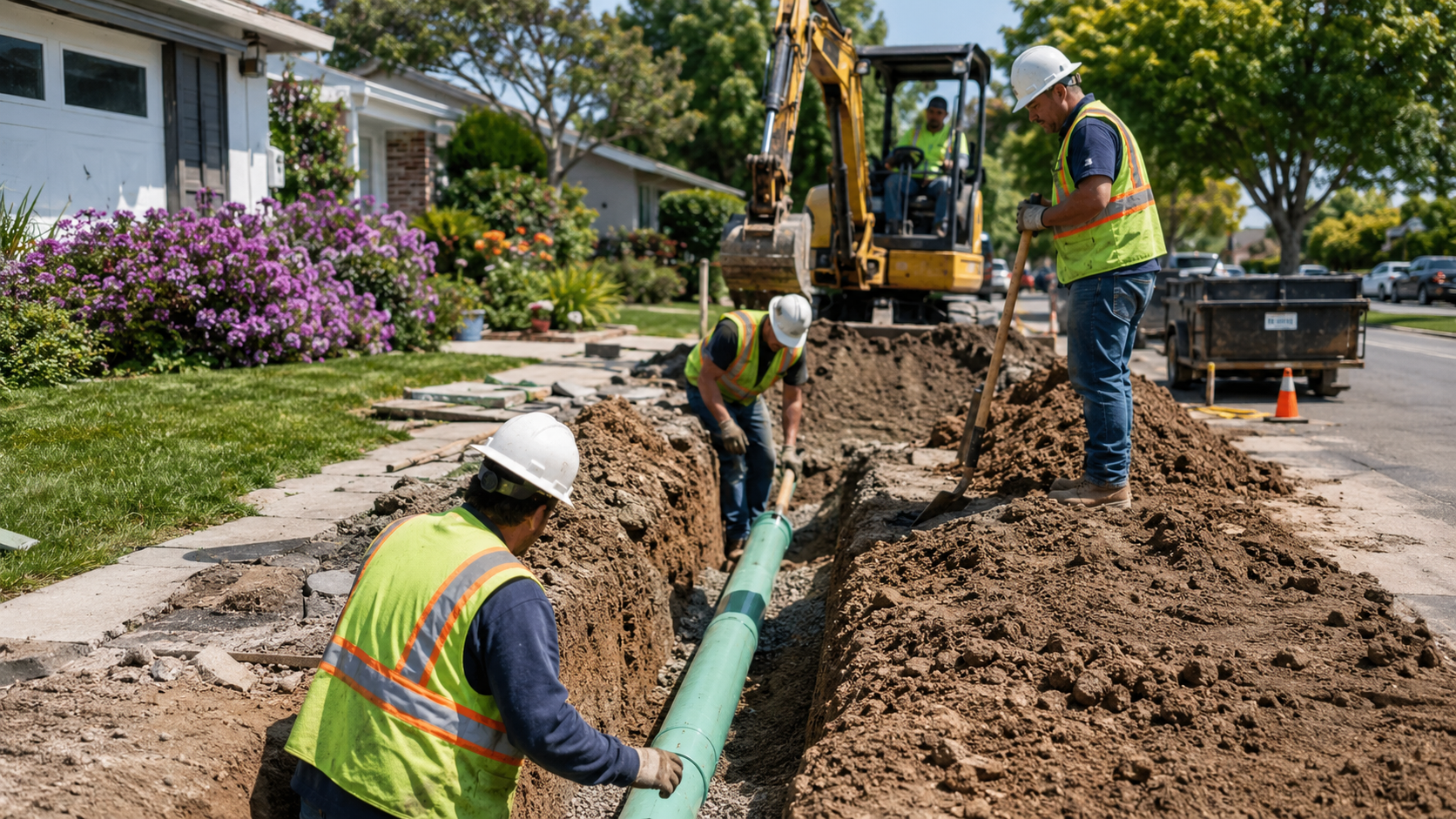
Traditional sewer replacement involves opening the ground above the damaged pipe. It may be necessary when the pipe has collapsed, the slope needs to be corrected, utilities create conflicts, or the sewer must follow a new route.
Although excavation is more visible, it gives the crew direct access to the line and allows precise correction of alignment and grade problems.
Trenchless pipe bursting
Pipe bursting replaces an existing sewer by breaking the old pipe underground while pulling a new pipe into place. Instead of opening a trench along the entire route, the process usually uses smaller access areas at each end.
This method can be a good choice when the existing alignment is suitable and site conditions permit the equipment to operate safely.
A professional evaluation is necessary because trenchless replacement is not appropriate for every collapsed, severely misaligned, or poorly sloped line.
What Happens During Sewer Replacement?
Although each property is different, a typical project includes:
- Locating and inspecting the existing sewer
- Identifying underground utilities
- Obtaining required permits
- Preparing access or excavation areas
- Removing, bursting, or bypassing the damaged pipe
- Installing and connecting the new sewer
- Testing the completed installation
- Performing a final camera inspection when appropriate
- Restoring the work area
Good planning is especially important when the line passes under concrete, landscaping, parking areas, or other improvements.
A Long-Term Solution Can Bring Peace of Mind
Sewer replacement is a significant project, but it can eliminate years of repeated backups and temporary fixes. The goal is not simply to install a new pipe. The goal is to restore dependable drainage with the correct materials, slope, connections, and testing.
PJ Plumbing handles residential, commercial, and industrial sewer work throughout the Bay Area. We provide straightforward recommendations based on the actual condition of the line—not assumptions.
Contact Us Today
If your sewer keeps backing up, you have a damaged underground pipe, or you need emergency sewer repair, contact PJ Plumbing for a professional assessment. We are here to provide fast, dependable service.
Jaime (Supervisor):
Cell: (510) 383-6260 | Office: (510) 415-5774
Patricia (Office Manager):
(510) 386-5305
Email:
pjplumbing31@hotmail.com
Office Address:
10415 Byron Ave, Oakland, CA 94603