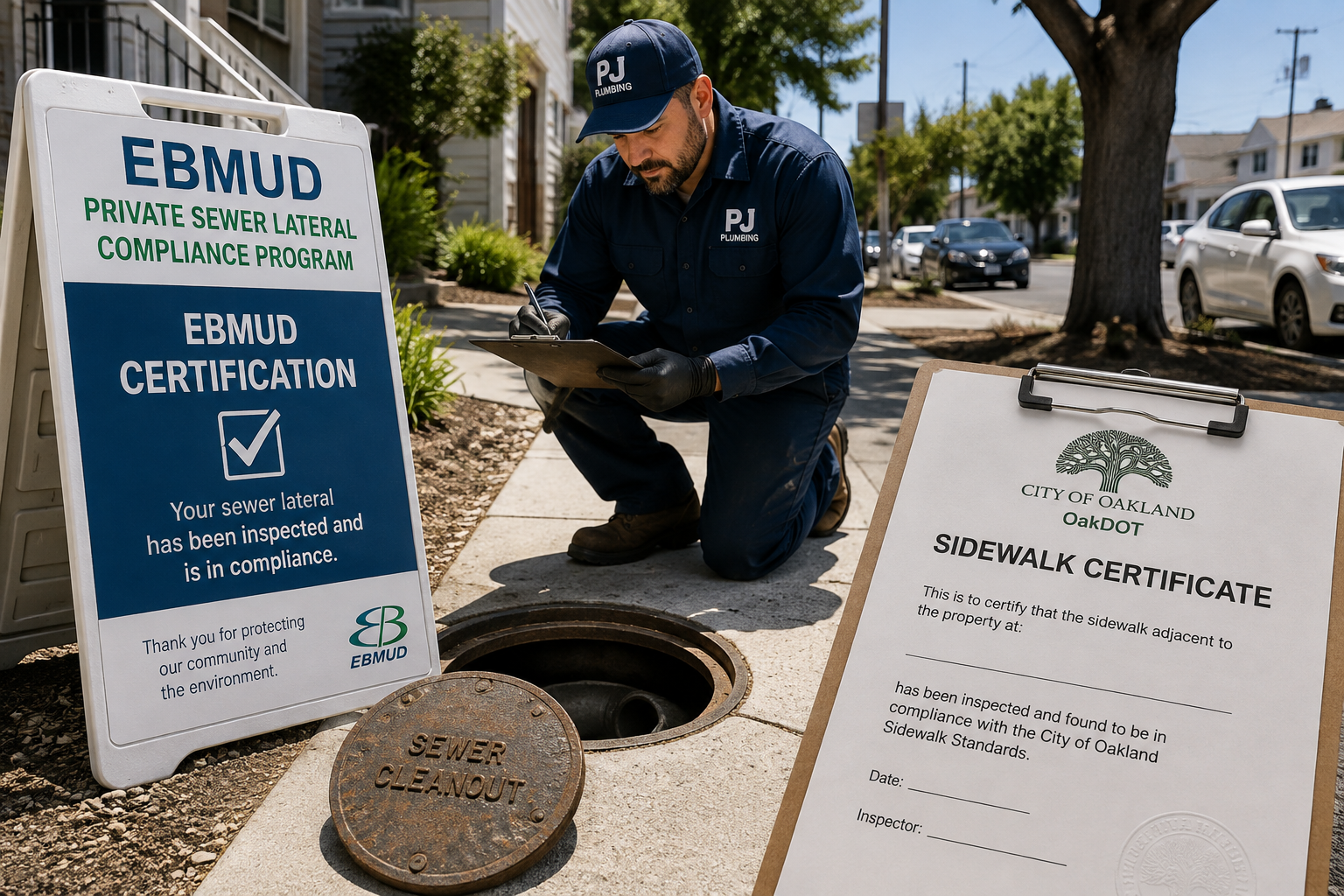
Selling or renovating a property in Oakland can involve more than a standard home inspection. Depending on the project and transaction, the property owner may need to address both the private sewer lateral and the sidewalk next to the property.
These requirements are easy to confuse because they may arise during the same real estate transaction. However, EBMUD certification and an Oakland sidewalk certificate are two separate processes managed by different agencies.
Understanding the difference early can help property owners, buyers, sellers, and real estate professionals avoid last-minute surprises.
What Is EBMUD Certification?
The East Bay Municipal Utility District operates a Regional Private Sewer Lateral program in several East Bay communities.
A private sewer lateral is the pipe that carries wastewater from a private building to the public sewer main. Over time, these underground pipes can develop cracks, leaking joints, root intrusion, or other defects.
An EBMUD Compliance Certificate confirms that the applicable private sewer lateral has passed the required verification and has been shown to be free of leaks.
The certificate is issued by EBMUD—not by the plumbing contractor. A contractor may inspect, repair, replace, permit, prepare, and test the sewer lateral, but EBMUD makes the final certification decision after the required inspection or verification process.
When Is EBMUD Certification Required?
According to EBMUD, a Compliance Certificate may be required when:
- A covered property is being bought or sold
- Building or remodeling work exceeds $100,000
- The size of the property’s water meter is being changed
Property owners may also pursue certification voluntarily, even when none of these events has occurred.
Because program coverage and property conditions can vary, owners should check the status of the specific parcel before assuming that a current certificate is not required.
How the EBMUD Certification Process Works
The exact scope depends on the property, but the general process usually includes the following steps.
1. Check the property’s compliance status
The owner or representative should first determine whether the property already has a valid certificate, qualifies for an exemption, or requires additional work.
Starting this step early is important during a sale. Waiting until the final days of escrow can create unnecessary pressure for everyone involved.
2. Inspect the private sewer lateral
A qualified contractor evaluates the sewer lateral for cracks, leaks, damaged joints, roots, or other defects.
A camera inspection is useful for reviewing the internal condition of the pipe, but the final compliance process may also require a pressure or verification test.
3. Repair or replace the line when necessary
A sewer lateral that does not meet the applicable requirements may need a localized repair, lining, or complete replacement.
The appropriate method depends on the condition of the pipe, its route, the type of damage, access limitations, permit requirements, and local agency standards.
4. Arrange the required verification
Once the lateral is ready, the contractor typically coordinates the verification test and inspection. The line must pass before the Compliance Certificate can be issued.
5. Receive the certificate
After the sewer lateral successfully passes the required process, EBMUD issues the certificate.
Property owners should keep the final documentation with their real estate and maintenance records.
What Is an Oakland Sidewalk Certificate?
The Oakland sidewalk certification requirement is separate from the private sewer lateral program.
A sidewalk certificate concerns the condition of the public sidewalk adjacent to an Oakland property. It does not certify the underground sewer line, and EBMUD does not issue it.
Oakland’s requirements generally apply to property owners selling, buying, or undertaking a major renovation valued above the applicable threshold. The sidewalk may need to be inspected, and identified hazards may have to be repaired before a compliance certificate is issued.
Potential sidewalk concerns may include:
- Vertical displacement between concrete panels
- Cracks that create a tripping hazard
- Damage caused by tree roots
- Deteriorated concrete
- Obstructions affecting pedestrian access
- Conditions that do not meet applicable accessibility requirements
The City of Oakland, through the appropriate transportation and permit process, manages the sidewalk certificate.
EBMUD Certification and Sidewalk Certification Are Not the Same
Completing one requirement does not automatically satisfy the other.
| Requirement | Concerns | Responsible agency |
|---|---|---|
| EBMUD certification | Private sewer lateral and leak verification | EBMUD |
| Sidewalk certificate | Condition of the adjacent sidewalk | City of Oakland/OakDOT |
A property could have a sewer lateral that passes the EBMUD process while still needing sidewalk repairs. It could also have a compliant sidewalk but require sewer lateral replacement.
Property owners should check both requirements separately.
Can Sewer Work Affect the Sidewalk?
In some cases, yes.
A sewer lateral may run beneath a yard, driveway, sidewalk, or public right-of-way before connecting to the public sewer main. If excavation is required in or near the sidewalk, additional permits, traffic controls, inspections, concrete restoration, or right-of-way requirements may apply.
Oakland requires an appropriate sewer lateral permit for covered installations and work in private property or the public right-of-way. The City may inspect pipe materials, connections, and related work before the area is restored.
This is one reason it is important to identify the sewer route before planning repairs.
How to Prevent Delays During a Property Sale
Start before the property goes under contract
Checking the certificate status early provides time to inspect the lateral, obtain estimates, schedule permits, and complete repairs without putting the closing date at risk.
Do not assume a standard home inspection covers everything
A general home inspection may identify plumbing concerns, but it is not the same as an EBMUD verification or Oakland sidewalk certification process.
Locate the sewer clean out
A usable clean out provides access for camera inspection, cleaning, testing, and other sewer work. If one cannot be located, additional work may be required before the line can be fully evaluated.
Keep sewer and sidewalk documents organized
Maintain copies of inspection videos, permits, invoices, verification results, certificates, and repair documentation. These records can be valuable during escrow and for future property maintenance.
Confirm responsibilities in writing
Buyers and sellers should clearly establish who will pay for inspections, repairs, certificates, deposits, or extensions. A real estate professional or attorney can help explain contractual responsibilities.
How PJ Plumbing Can Help
PJ Plumbing can assist with the sewer-lateral portion of the process by evaluating the line and recommending the appropriate repair or replacement when defects are found.
Our services include:
- Locating accessible sewer entry points
- Camera inspection
- Sewer and drain cleaning
- Clean out installation or repair
- Private sewer lateral repair
- Sewer replacement
- Trenchless repair options when suitable
- Final inspection of completed sewer work
The sidewalk certificate remains a separate City of Oakland process. When both requirements apply, property owners should coordinate the timelines so that one unfinished item does not delay the transaction.
Contact Us Today
If you need help evaluating or repairing a private sewer lateral before EBMUD certification, contact PJ Plumbing. Starting the process early can help reduce stress and prevent avoidable delays.
Jaime (Supervisor):
Cell: (510) 383-6260 | Office: (510) 415-5774
Patricia (Office Manager):
(510) 386-5305
Email:
pjplumbing31@hotmail.com
Office Address:
10415 Byron Ave, Oakland, CA 94603