When a sewer replacement becomes unavoidable, the next decision is just as important as the first: which method should you use to get it done? Trenchless and traditional excavation each solve the same underlying problem, but they differ significantly in cost, disruption, and timeline — and choosing the wrong one for your property can cost you more than the pipe itself.
What Traditional Sewer Replacement Involves
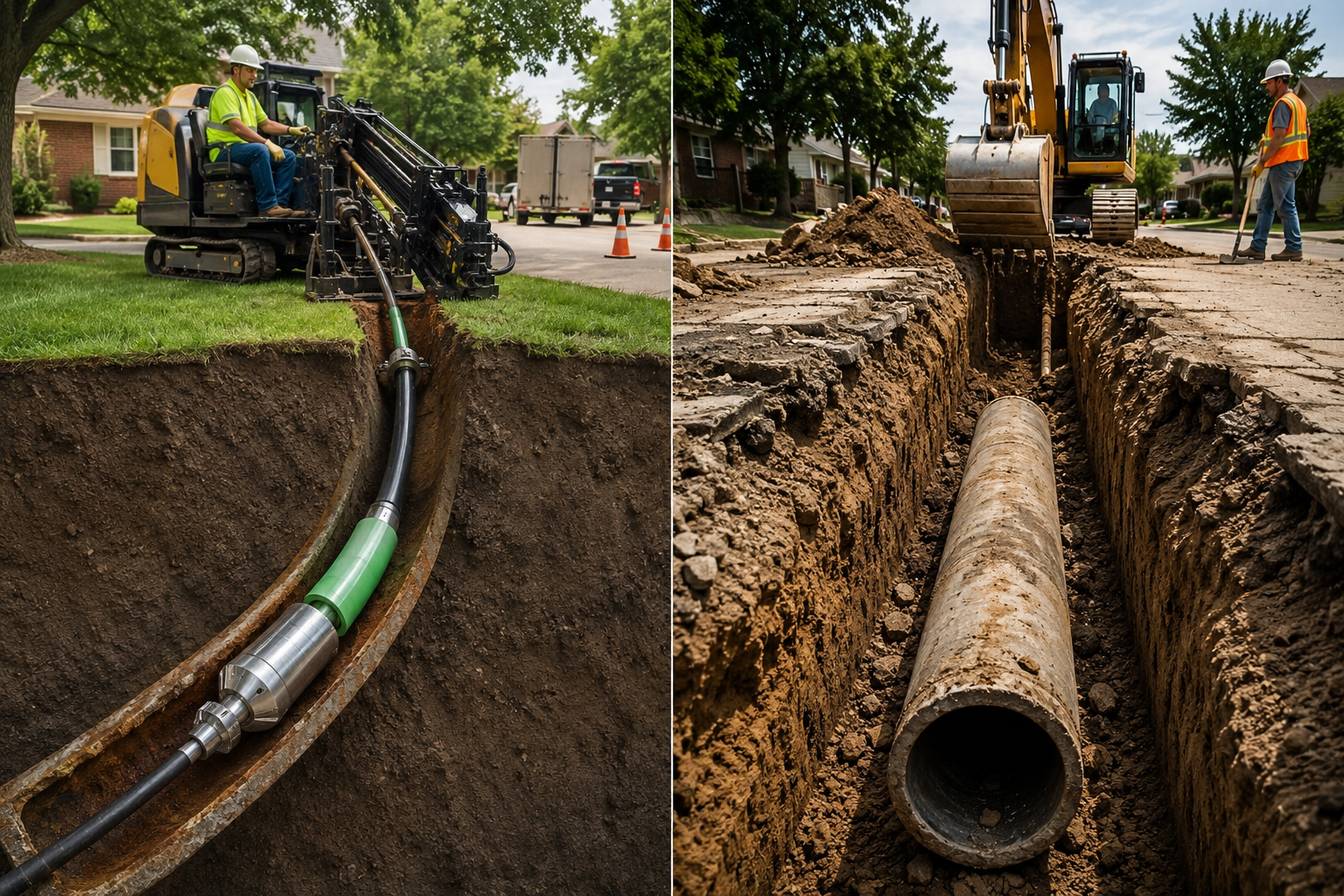
Traditional sewer replacement requires digging a trench along the entire length of the damaged sewer lateral, removing the old pipe, and installing a new one before backfilling the trench. This method is well-suited for properties where the line is shallow, easily accessible, and free of major obstacles like mature trees, hardscape, or structures built over the pipe’s path.
The tradeoff is disruption: traditional excavation tears up landscaping, driveways, or sidewalks along the trench line, and restoration afterward adds both time and cost to the project.
What Trenchless Sewer Replacement Involves
Trenchless methods, such as pipe bursting or cured-in-place pipe (CIPP) lining, replace or rehabilitate the line through small access points rather than a continuous trench. A clean out or a pair of small excavation pits are often all that’s needed, with the new pipe pulled or installed through the existing pathway underground.
This approach minimizes surface damage, which matters most on properties with mature landscaping, decorative hardscape, or a driveway sitting directly over the line. It’s frequently the preferred choice when a sewer lateral runs beneath a sidewalk, since it avoids the extensive concrete removal traditional methods would require.
How Property Layout Affects Your Options
Not every property is a good candidate for trenchless work. Multiple bends in the line, severe pipe collapse, or an undersized existing pipe can limit trenchless options and push the project back toward a traditional approach. A camera inspection through an existing clean out — or installing one if the property doesn’t have one — is the first step in determining which method will actually work for your specific line.
Cost Considerations Beyond the Estimate
While trenchless sewer replacement often carries a higher per-foot cost than traditional excavation, it can end up being the more economical choice once you factor in landscaping restoration, driveway or patio repair, and reduced labor time. Comparing quotes side by side without accounting for restoration costs is one of the most common mistakes property owners make when budgeting for this kind of project.
Don’t Wait Until It’s an Emergency Sewer Repair
Whichever method fits your property, the decision is always easier — and cheaper — when it’s made proactively rather than during an emergency sewer repair. Emergency situations often limit your choice of method entirely, since a collapsed line may need immediate excavation regardless of which approach would have been preferable under normal circumstances.
Compliance Still Applies, Regardless of Method
If your property is subject to EBMUD certification or requires a sidewalk certificate as part of a sale or permit process, both trenchless and traditional replacements need to meet the same inspection standards once the work is complete. Trenchless methods can actually simplify sidewalk compliance, since there’s little to no surface disruption to repair or re-certify afterward.
Making the Right Choice
The best method isn’t about which one sounds more modern — it’s about which one fits your property’s layout, your pipe’s condition, and your budget once restoration costs are included. A proper inspection before committing to either path is the only way to know for certain which sewer replacement approach will actually save you money in the long run.